This is not for you
What selling candy door to door taught me about selling software.
This is not for you
This is not for you. This one is for me. I suck at selling and I want to share my journey to becoming better at it. I’ve tried plenty of times, and it’s not all failures, but there’s still a lot to learn. Both of my parents were very entrepreneurial and always allowed me to try my own ventures, even when I was barely able to conjugate a verb.
Story 1: Door to Door Candy
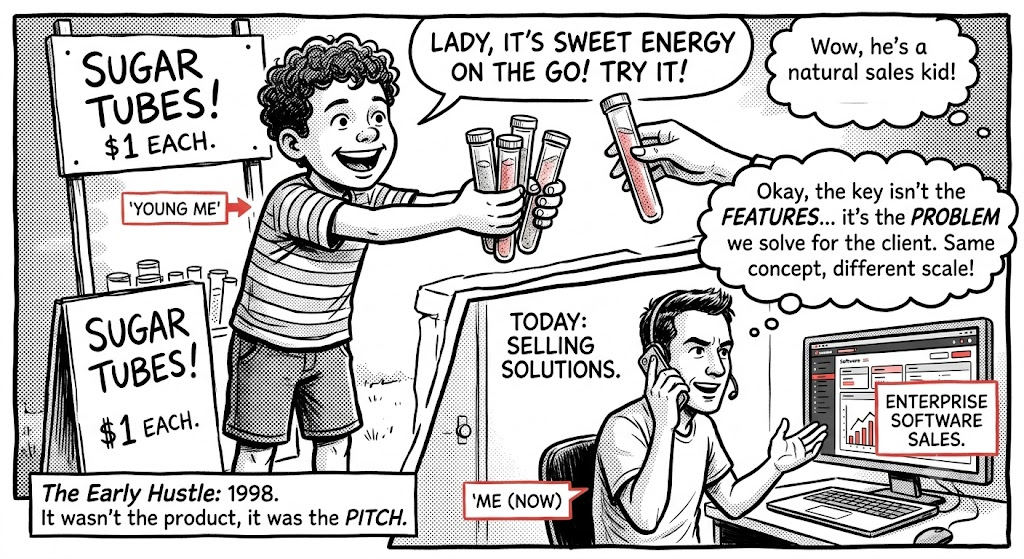
When I was about 9 years old I decided to sell candy door to door. I started out by wheeling all the candy we had (my family owned a party business with pony rides, moon bounces, magic shows, etc). I walked around the neighborhood trying to sell sugar in a tube. It was pre-packaged and came in fun colors. Basically like pixie sticks on steroids. I tried standing on the corner of a very busy road with a spray painted scrap wood sign that said “Buy Crave!” It kind of worked. Some people stopped, some people purchased, and one person thought it said “Crash” as if I was hoping they’d crash. Clearly handwriting matters.
I went door to door and some of my neighbors bought. I experimented with my pitch. Some people I’d walk up to and say “would you like to buy some Crave?” They’d ask, “What’s Crave?” Honestly, no one knew what the stuff was. It wasn’t a famous candy (or colored sugar). I adjusted my pitch to the next person, “Would you like to buy some candy? It’s great for kids and supports kids (me)” while showing them what it looked like. That often gave me more of a success rate.
I tried bundle deals, people would negotiate, and every question someone asked me I’d think about when I walked up to the next door. I learned something at each door. How to get their attention, explain what I was selling, and say why they should buy. These are things I homed in on so I could get the next sale. I was running A/B tests in a driveway before I knew the term existed.
The selling didn’t necessarily fail. I probably brought back maybe $50 or so at $2 a pop. That felt like a fortune as a nine-year-old.
I retired from the candy business undefeated, mostly because I ran out of neighbors.
Story 2: Restaurant Management Software
After teaching myself how to build websites and program them, I tried helping out my father’s restaurants. I realized a big issue. Most restaurant websites were built in Flash, and lots of business customers had BlackBerries, Palm Pilots, and Windows Phones. None of them would display these heavy websites well. In fact, most of them couldn’t display them at all.
The restaurant software had some unique features. Schedule and shift management, website management, menus, and specials.
I knocked on every restaurant I could walk to around Annapolis. “Hi, I’m Matt and I’d like to sell you restaurant software” would be met with “uh, so you don’t want a table?” Quickly learning that wasn’t the right hook. Lots of blank stares, lots of confusion why a teenager was trying to sell them something—anything.
Selling software door to door was incredibly challenging and frustrating. Candy was easy: people understood the value immediately. Software was significantly different. It required a lot of education. Back then people barely heard of “programs” (now we call them apps). Restaurants are undeniably cheap. It’s the hardest business to be in. Most fail in six months. Knowing this helped me adjust my pitch. Unlike my candy empire, I never got a yes on the first ask so I learned to ask for a follow-up meeting where I could demo what I was building and made one promise. I’d tell them exactly how I’d help them beat the competition. This got me a lot of follow-up conversations.
I did land a few paying customers, though I also picked one of the hardest industries to sell to. Restaurants are incredibly volatile. Picking my audience was fundamental to my learning. Eventually, I shut it down after someone offered to buy the entire software. I didn’t understand that they wanted to own all of it, so I sold it. My first exit, three whole digits, I was rich—for a week.
At nine I learned to stop selling candy in a tube and started selling “supports kids.” As a teenager, I stopped selling software and started selling “I’ll tell you how to beat your competition.” Nobody buys the thing, they buy what it does for them. If I could tell nine-year-old me one thing about selling, it’d be to have a good story.
Why do I need this? This is for me. To remind me of what I’ve tried and learned, and to take those lessons to the next level.
Related posts
Six Years. One Meeting. Then, Poof
Six years building developer experience at 8x8 ended in one meeting. Here's the story of how I got there, what I built, and what I learned along the way.

Taking over a 48-hour startup competition taught me how to get clients
Two years running RIT48 — how a student event got GitHub and Mozilla to sponsor a weekend in Rochester, got alumni to fly in as judges, and made people start calling me.
An Overnight Success That Wasn't
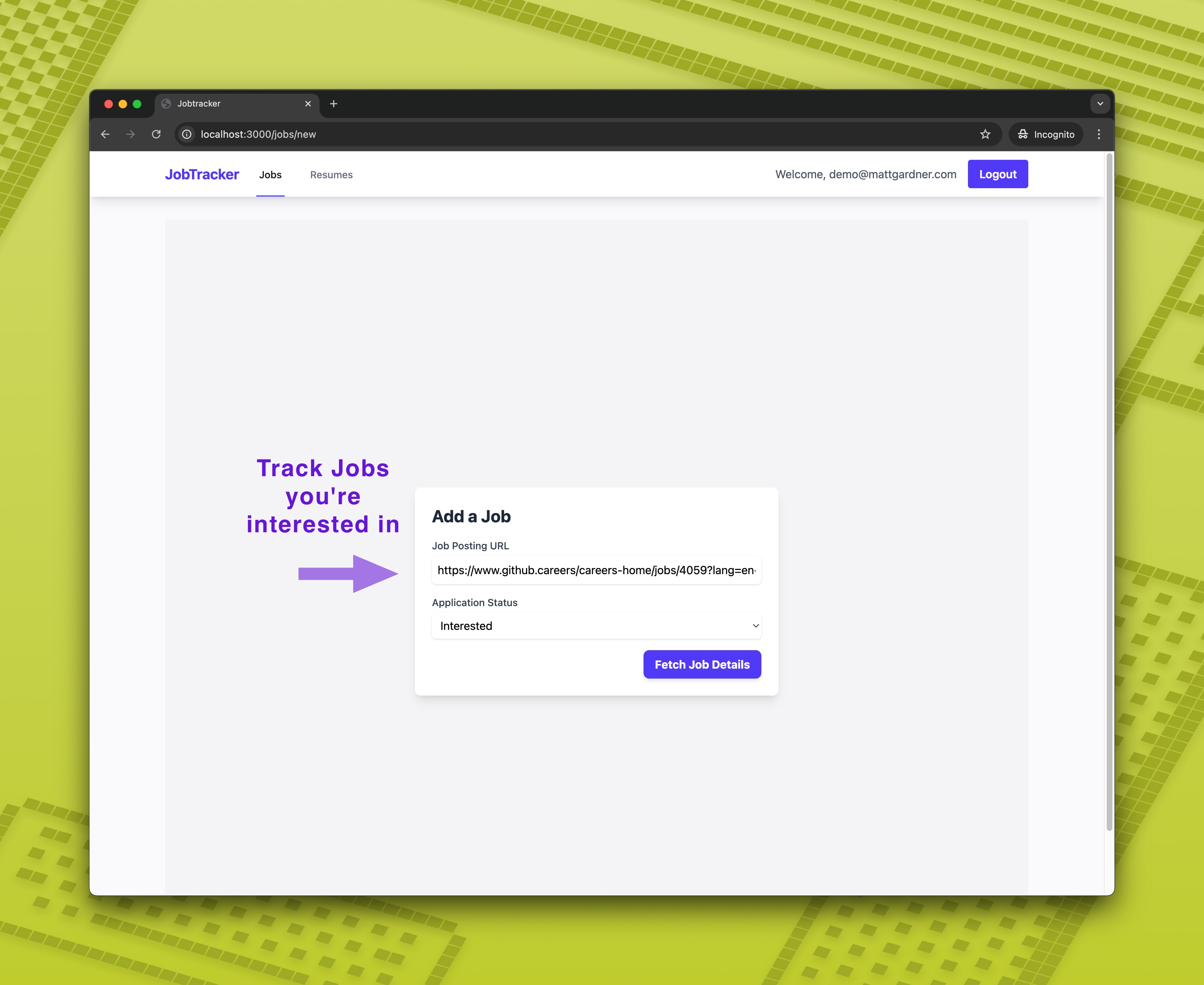
JobTracker's wait-list went viral overnight — except it was bots. Here's how I cleaned it up with captcha, validation, rate limits, and fingerprinting.